
Home » Ingredients » Bilberry
Bilberry: What It Is, What the Research Shows for Eyes, and Safety
Bilberry (Vaccinium myrtillus) is a small, dark blue berry that grows wild in northern Europe and is a close relative of the blueberry. Its extract, rich in purple pigments called anthocyanins, is sold mainly for eyesight.
Last updated 31 October 2026
Bilberry: the short answer
Bilberry is a wild European relative of the blueberry, sold as an extract rich in anthocyanins, mainly for eyesight. Despite the story of British pilots eating bilberry jam in World War II, the most rigorous trials found no improvement in night vision in healthy people. One 12-week trial found a small effect on a measure of eye-focusing strain after screen work. The fruit is safe in food amounts, and extracts of up to 160 mg a day were used safely in studies for up to six months.
| What it is | A wild European relative of the blueberry (Vaccinium myrtillus), dark all the way through; supplements are fruit extracts standardized to anthocyanins. |
|---|---|
| Most studied for | Night vision, where the most rigorous trials found no benefit in healthy people; one trial on eye-focusing strain after screen work. |
| Amounts used in studies | 240 mg a day for 12 weeks in the screen-strain trial; extracts of up to 160 mg a day were used safely for up to six months. |
| Strength of evidence | Weak: NCCIH says bilberry has not been clearly shown to help any health condition. |
| Safety | The fruit is safe in food amounts and extracts appear well tolerated; the leaves may be unsafe in high doses or long-term. Little is known about larger amounts in pregnancy or breastfeeding. |
| In products we review | iGenics, NeuroZoom, Neuro Serge, VisiFlora |
Sources: Bilberry: Usefulness and Safety (NCCIH) · Bilberry for night vision: systematic review (Survey of Ophthalmology 2004) · 12-week bilberry trial on eye-focusing strain (Nutrients 2020)
Benefits of Bilberry
What is bilberry?
Bilberry, Vaccinium myrtillus, is a low shrub native to northern Europe that also grows in parts of North America. Its small, dark blue berries look like blueberries, and both the berries and the leaves have long been used in traditional medicine. Supplements are made from the fruit and are usually standardized to their content of anthocyanins, the purple pigments thought to be the active compounds.
Bilberry vs blueberry
The two are close relatives. Bilberries grow wild, singly or in pairs, on low shrubs, while the blueberries sold in shops are mostly cultivated North American species that grow in clusters on taller bushes. Bilberries are dark all the way through, while blueberries are pale inside, because bilberries carry anthocyanins in the flesh as well as the skin.
Why people take it
Bilberry is sold mainly for night vision, tired eyes and eye health with age, and less often for blood sugar and circulation.
Top Rated Supplements with Bilberry
Products we review that list Bilberry as an ingredient. Not every product discloses how much of each ingredient a serving contains, so check each review before assuming it matches the amounts used in studies.
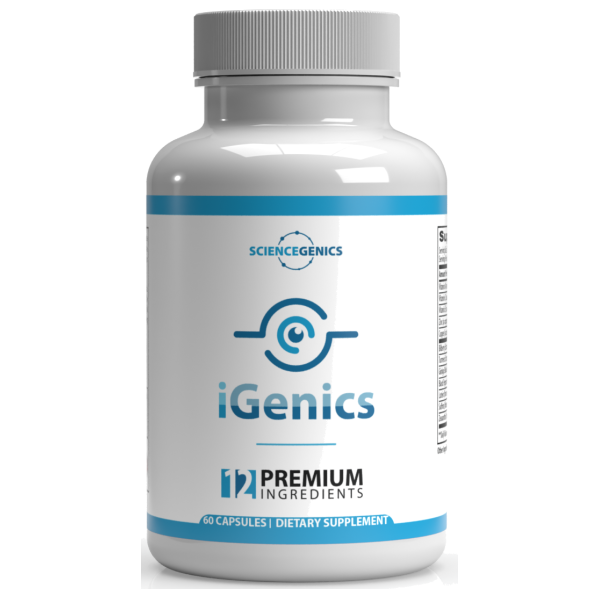
iGenics is a capsule from Science Genics sold for “healthier eyesight”. Its label lists 12 ingredients with full amounts, including vitamin C, zinc, copper, lutein, zeaxanthin, saffron, bilberry, turmeric and ginkgo. This review compares it with the AREDS2 eye vitamins that have real trial evidence, explains who those vitamins help, and covers the prices and the guarantee.
NeuroZoom is a dietary supplement that the vendor markets for memory, focus and mental clarity. The vendor calls it a 35-in-1 formula of vitamins, minerals, plant extracts and other compounds, but does not publish the amount of each. It is primarily intended for individuals looking to maintain their cognitive edge as they age or those facing high-pressure mental environments. Only a few of its ingredients, such as bacopa, have trial evidence for memory, and the formula itself has not been tested in a published trial.
Neuro Serge is a capsule sold as brain support, described as “a unique blend of 20+ ingredients and nutrients”. The sales page names only six: olive leaf, cassia cinnamon, deglycyrrhizinated licorice, green tea extract, grape seed extract and bilberry extract, in a proprietary blend with no amounts. This review covers what is known about those six, what the page leaves out, the real prices and the conditions on its 180-day refund.
VisiFlora is a one-a-day capsule sold as a “22-in-1” vision formula that “starts in the gut”. Its page names ingredients such as lutein, zeaxanthin, astaxanthin, bilberry, saffron, zinc and beta-carotene, but publishes no label. This review covers what the research shows for those ingredients, why the missing label and the beta-carotene matter, the real prices and the 60-day refund.
Scientific Analysis of Bilberry
Night vision
Bilberry’s reputation comes from a story that British pilots in World War II ate bilberry jam to see better at night. The US National Center for Complementary and Integrative Health (NCCIH) notes that this may have been superstition or a deliberate hoax to hide improvements in radar, but it prompted decades of research. A 2004 systematic review found 12 placebo-controlled trials. The four most recent, all randomized, found no benefit, and the reviewers concluded that the idea that bilberry improves normal night vision is not supported by rigorous studies. No good trials have tested it in people whose night vision is impaired.
Tired eyes from screen work
In a 12-week trial published in 2020, 109 healthy adults aged 20 to 60 took 240 mg of a standardized bilberry extract or a placebo each day. After a screen task, an instrument measurement of strain in the eye’s focusing muscle improved more with bilberry than with placebo. It was a single trial with a laboratory measure as its main outcome, and it has not been repeated.
Eye health with age
Bilberry is often sold to protect the retina and lens as eyes age, mostly on the strength of laboratory studies of anthocyanins. We found no good human trials showing that it prevents age-related eye problems, and it is not part of the AREDS2 formula tested by the US National Eye Institute. NCCIH sums up the evidence by saying that bilberry has not been clearly shown to help any health condition.
Blood sugar and circulation
Bilberry fruit and leaves have traditionally been used for blood sugar and circulation, but the human studies have been too small or too weak to show a clear benefit.
Side effects and safety
Bilberry fruit is considered safe in the amounts found in food, and NCCIH says fruit extracts of up to 160 mg a day were used safely in studies lasting up to six months. Bilberry leaves may be unsafe in high doses or over long periods. Little is known about amounts larger than those in food during pregnancy or breastfeeding. If you take any regular medicine, ask a doctor or pharmacist before using bilberry or other herbal products.
How much was used in studies
The screen-strain trial used 240 mg a day, and NCCIH describes extracts of up to 160 mg a day as used safely for up to six months. Extracts are standardized to different levels of anthocyanins, so amounts on different labels are not directly comparable.
Products we review that contain it
iGenics lists 480 mg of bilberry extract in its daily dose of two capsules, twice the amount in the screen-strain trial and more than the amounts NCCIH describes as studied for safety. VisiFlora, Neuro Serge and NeuroZoom include bilberry extract but do not say how much.
Frequently Asked Questions
A small, dark blue berry (Vaccinium myrtillus) that grows wild in northern Europe and is a close relative of the blueberry. Its extract, rich in anthocyanins, is sold mainly for eyesight.
Bilberries grow wild, singly or in pairs, on low shrubs and are dark all the way through. The blueberries sold in shops are mostly cultivated North American species that grow in clusters on taller bushes and are pale inside.
Probably not. A 2004 systematic review found that the four most recent randomized, placebo-controlled trials showed no benefit, and concluded that the night-vision claim is not supported by rigorous studies in healthy people.
Bilberry is a healthy fruit, but as a supplement its benefits are unproven. One 12-week trial found a small effect on a measure of eye-focusing strain after screen work; trials of night vision were negative, and NCCIH says it has not been clearly shown to help any health condition.
The fruit is safe in food amounts, and extracts of up to 160 mg a day were used safely in studies for up to six months. The leaves may be unsafe in high doses or long-term. Ask a doctor or pharmacist first if you take regular medicine, are pregnant or are breastfeeding.
Studies used extracts of up to 160 mg a day for up to six months, and 240 mg a day in a 12-week eye-strain trial. Extracts differ in strength, so follow the label of a standardized product.
Among the products we review, iGenics lists 480 mg of bilberry extract per daily dose, and VisiFlora, Neuro Serge and NeuroZoom include bilberry extract without stating the amount.
⚖️ Conclusion
Bilberry is a nutritious wild fruit with a famous wartime story, but its record as a supplement is weak. The most rigorous trials found no improvement in night vision in healthy people, and the one encouraging recent trial measured eye-muscle strain after screen work rather than how people saw. There is no good evidence that it protects eyes with age. Extracts appear safe at the amounts studied, but if your eyes are tired or your vision is changing, an eye examination will tell you more than a bilberry capsule.