
Home » Ingredients » Lutein
Lutein and Zeaxanthin: What the Research Shows for Your Eyes
Lutein and zeaxanthin are carotenoids, yellow plant pigments that collect in the macula at the center of the retina. They come mainly from leafy greens and egg yolks, and they are the main ingredients of most eye supplements.
Last updated 31 October 2026
Lutein: the short answer
Lutein and zeaxanthin give the center of the retina its yellow color. In the large AREDS2 trial, adding 10 mg of lutein and 2 mg of zeaxanthin a day to the AREDS vitamins did not slow advanced macular degeneration overall, but they proved a safer replacement for beta-carotene, which raised lung cancer risk in former smokers. On their own they have not been shown to prevent macular degeneration or cataracts, or to sharpen healthy eyes.
| What it is | Two carotenoid pigments (not converted to vitamin A) that form the macular pigment in the center of the retina. Found in leafy greens, corn, peas and egg yolks; supplements usually use marigold extract. |
|---|---|
| Most studied for | Slowing progression of age-related macular degeneration (as part of the AREDS2 formula), cataracts, and macular pigment and visual function in healthy eyes. |
| Amounts used in studies | AREDS2: 10 mg of lutein and 2 mg of zeaxanthin a day for about five years, alongside vitamins C and E, zinc and copper. |
| Strength of evidence | Moderate for the AREDS2 formula in people with intermediate AMD; lutein and zeaxanthin alone had little or no effect on progression (Cochrane 2023) and did not reduce cataract surgery. |
| Safety | Well tolerated over five years in AREDS2. The safer carotenoid for smokers and former smokers, in whom beta-carotene raised lung cancer risk. |
| In products we review | iGenics, VisiFlora |
Sources: AREDS2 main results (JAMA 2013) · AREDS2 10-year follow-up (JAMA Ophthalmology 2022) · Cochrane review: antioxidant supplements for AMD (2023) · NIH (NCCIH): AREDS2 follow-up summary
Benefits of Lutein
What are lutein and zeaxanthin?
Lutein and zeaxanthin are carotenoids, the same family of plant pigments as beta-carotene, but the body does not turn them into vitamin A. They collect in the macula, the small central part of the retina responsible for sharp, detailed vision, where they form the yellow “macular pigment”. There they filter blue light and act as antioxidants. The body cannot make them, so they come from food: kale, spinach and other leafy greens, peas, corn and egg yolks. Most supplements use lutein extracted from marigold flowers.
Why they are linked to eye health
Taking more lutein and zeaxanthin raises the density of the macular pigment, and in observational studies people who eat more of them tend to have a lower risk of advanced macular degeneration. Studies of that kind cannot prove cause and effect, which is why the large randomized AREDS2 trial tested them directly.
Top Rated Supplements with Lutein
Products we review that list Lutein as an ingredient. Not every product discloses how much of each ingredient a serving contains, so check each review before assuming it matches the amounts used in studies.
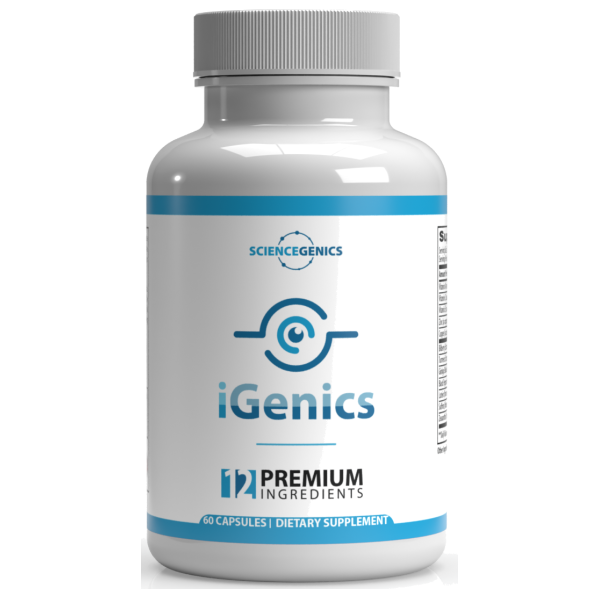
iGenics is a capsule from Science Genics sold for “healthier eyesight”. Its label lists 12 ingredients with full amounts, including vitamin C, zinc, copper, lutein, zeaxanthin, saffron, bilberry, turmeric and ginkgo. This review compares it with the AREDS2 eye vitamins that have real trial evidence, explains who those vitamins help, and covers the prices and the guarantee.
VisiFlora is a one-a-day capsule sold as a “22-in-1” vision formula that “starts in the gut”. Its page names ingredients such as lutein, zeaxanthin, astaxanthin, bilberry, saffron, zinc and beta-carotene, but publishes no label. This review covers what the research shows for those ingredients, why the missing label and the beta-carotene matter, the real prices and the 60-day refund.
Scientific Analysis of Lutein
Macular degeneration: the AREDS2 trial
AREDS2 enrolled 4,203 people at high risk of advanced age-related macular degeneration (AMD). Adding 10 mg of lutein and 2 mg of zeaxanthin a day to the original AREDS vitamins did not reduce progression to advanced AMD overall: after five years, 29% of the lutein group and 31% of the placebo group had progressed, a difference that could be chance. The trial did find more lung cancers in people taking beta-carotene, mostly former smokers, so the recommended AREDS2 formula replaces beta-carotene with lutein and zeaxanthin. In a 10-year follow-up, people originally given lutein and zeaxanthin had a lower risk of late AMD than those given beta-carotene, without the extra lung cancer risk.
The AREDS2 formula is for people who already have intermediate AMD, or advanced AMD in one eye, and it is worth discussing with an eye doctor. It has not been shown to prevent AMD in people with healthy eyes.
What the Cochrane review found
A 2023 Cochrane review of 26 trials concluded that AREDS-type antioxidant vitamins and minerals probably slow progression to late AMD in people who have the disease, but that lutein and zeaxanthin taken on their own have little or no effect on progression.
Cataracts
In AREDS2, lutein and zeaxanthin did not reduce the overall need for cataract surgery. Not smoking and protecting the eyes from strong sunlight have better support.
Healthy eyes, screens and blue light
Small trials in people with healthy eyes show that supplements raise macular pigment, with mixed results for glare and contrast. There is no good evidence that lutein relieves eye strain from screens or makes normal vision sharper.
Dose and how to take them
The best-tested dose is the AREDS2 amount: 10 mg of lutein and 2 mg of zeaxanthin a day. Both are fat-soluble, so they are absorbed better with a meal that contains some fat. Many eye supplements contain more, but higher doses have not been shown to work better.
Safety
Lutein and zeaxanthin were well tolerated over five years in AREDS2, with no serious side effects linked to them. For smokers and former smokers they are the safer choice over beta-carotene, which raised lung cancer risk in AREDS2. Getting them from leafy greens and eggs is safe for everyone.
Products we review that contain them
iGenics lists 20 mg of lutein and 10 mg of zeaxanthin, more than the AREDS2 doses. VisiFlora lists both but gives no amounts, and it also contains beta-carotene, the ingredient AREDS2 removed for former smokers. Our eye health guide compares them.
Frequently Asked Questions
They form the yellow pigment of the macula, which filters blue light. As part of the AREDS2 vitamin formula they help slow macular degeneration in people who already have intermediate disease. On their own they have not been shown to prevent eye disease or improve healthy eyesight.
Not on their own. In AREDS2, adding them to the AREDS vitamins did not slow advanced AMD overall, and a 2023 Cochrane review found they had little or no effect when taken alone. They are mainly used in place of beta-carotene in the AREDS2 formula.
The best-tested dose is 10 mg of lutein with 2 mg of zeaxanthin a day, as in AREDS2. Higher doses are common in eye supplements but have not been shown to work better. Take them with a meal that contains some fat.
Dark leafy greens such as kale and spinach, collard greens, peas, corn and egg yolks. A diet rich in leafy greens and colorful vegetables provides them naturally.
Lutein is part of the eye’s own blue-light filter, but there is no good evidence that supplements relieve eye strain from screens or make normal vision sharper. Breaks from the screen and correct glasses help more.
Yes, for most people. Lutein and zeaxanthin were well tolerated over five years in AREDS2. Unlike beta-carotene, they did not raise lung cancer risk in former smokers.
For people with AMD, yes in one important way: AREDS2 replaced beta-carotene with lutein and zeaxanthin because beta-carotene raised lung cancer risk in former smokers, and in the 10-year follow-up lutein and zeaxanthin were linked to a lower risk of late AMD than beta-carotene.
Among the eye supplements we review, iGenics lists 20 mg of lutein and 10 mg of zeaxanthin, and VisiFlora lists both without amounts, alongside beta-carotene.
⚖️ Conclusion
Lutein and zeaxanthin are the pigments of the macula, and they earned their place in eye supplements through AREDS2: not because they slowed macular degeneration on their own, but because they safely replaced beta-carotene in a formula that helps people who already have intermediate AMD. For healthy eyes, cataracts or screen strain, there is no good evidence that supplements help, and leafy greens and eggs provide them anyway. If you have AMD, ask your eye doctor about an AREDS2 formula with 10 mg of lutein and 2 mg of zeaxanthin; if you are a smoker or former smoker, avoid formulas with beta-carotene.