
Home » Ingredients » Streptococcus Salivarius
Streptococcus Salivarius K12 and M18: What the Research Shows
Streptococcus salivarius is one of the most common bacteria in the human mouth. Two strains, K12 and M18, are sold as oral probiotics, mainly for breath, teeth and sore throats.
Last updated 31 October 2026
Streptococcus Salivarius: the short answer
S. salivarius K12 is the most studied probiotic for bad breath, but its trials are small and mixed: lozenges cut the sulfur gases behind bad breath after an antiseptic rinse, yet did no better than placebo when a coated tongue was left uncleaned. M18 slightly lowered plaque in one children’s trial, and the K12 studies on strep throat were small and not randomized. It is generally well tolerated.
| What it is | A common, mostly harmless mouth bacterium. Two strains, K12 and M18 (BLIS Technologies, New Zealand), are sold as oral probiotics; effects are specific to the strain. |
|---|---|
| Most studied for | Bad breath (K12), dental plaque in children (M18), and preventing repeat strep throat and ear infections in children (K12). |
| Amounts used in studies | Lozenges or chewable tablets dissolved in the mouth, taken daily for a few days to three months: about one week in the 2006 breath trial, 30 days in the 2020 coated-tongue trial, and three months in the children’s plaque and throat studies. |
| Strength of evidence | Limited: small trials with mixed results for bad breath, one children’s trial with a borderline effect on plaque, and throat studies that were not randomized. |
| Safety | Generally well tolerated; the FDA had no questions about GRAS notices for K12 (GRN 591) and M18 (GRN 807) in foods. Rare infections occur in people who are seriously ill, immunocompromised or have damaged heart valves. |
| In products we review | ProDentim |
Sources: K12 bad-breath trial (Burton 2006) · K12 coated-tongue trial (He 2020) · Probiotics for bad breath meta-analysis (BMJ Open 2022) · M18 trial in children (Burton 2013) · K12 strep throat study (Di Pierro 2012) · FDA GRAS notice GRN 591 (K12)
Benefits of Streptococcus Salivarius
What is Streptococcus salivarius?
Streptococcus salivarius is one of the most common bacteria in the human mouth, especially on the tongue, and one of the first to settle there after birth. Most strains are harmless. Two of them, K12 and M18, are sold as oral probiotics, usually in lozenges that dissolve slowly so the bacteria stay in the mouth instead of being swallowed straight away.
K12 and M18
K12 was isolated by Professor John Tagg at the University of Otago in New Zealand from the mouth of a healthy child. It makes two antibacterial peptides, salivaricin A2 and salivaricin B, which stop the growth of Streptococcus pyogenes, the bacterium behind strep throat, in laboratory tests. M18 is sold for dental health. Both are supplied by BLIS Technologies, a New Zealand company, and the FDA had no questions about the company’s notices that they are generally recognized as safe (GRAS) in foods: GRN 591 for K12 (2016) and GRN 807 for M18 (2019). That is a food-safety finding, not evidence that they work.
Top Rated Supplements with Streptococcus Salivarius
Products we review that list Streptococcus Salivarius as an ingredient. Not every product discloses how much of each ingredient a serving contains, so check each review before assuming it matches the amounts used in studies.
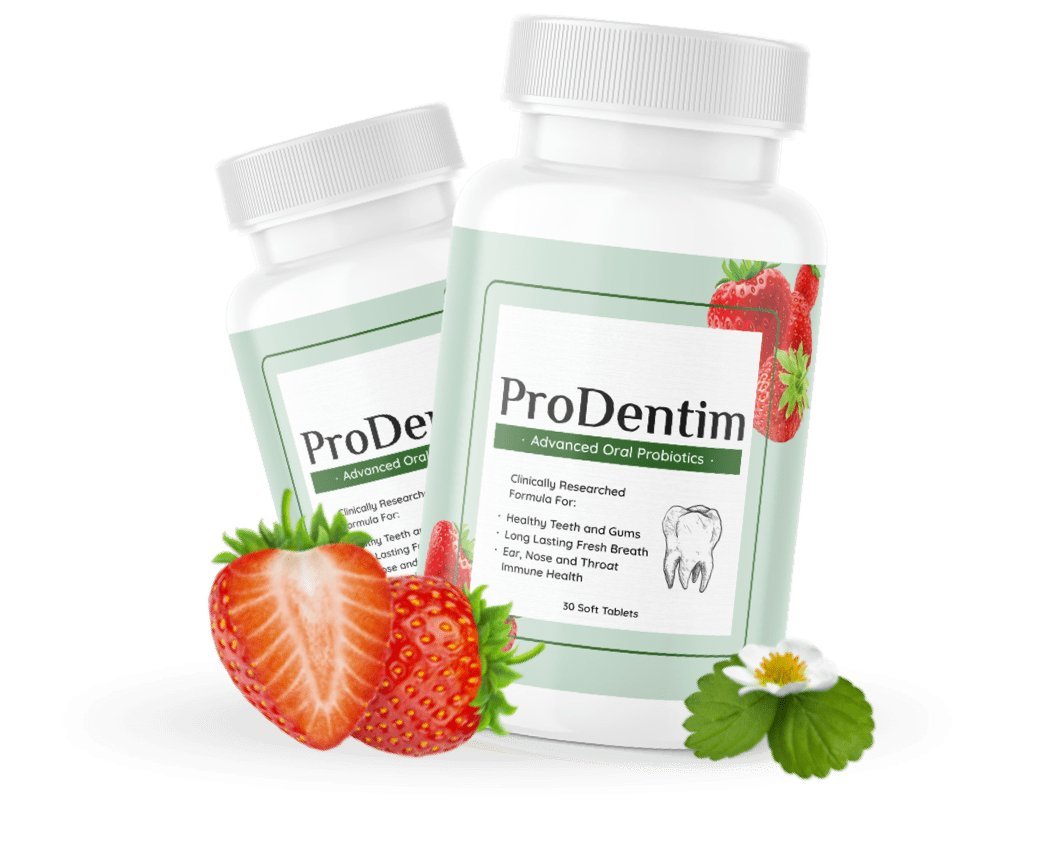
ProDentim is a probiotic soft tablet sold for healthier gums and teeth and fresher breath. This review covers its full label, including an ingredient the sales page leaves out, what research shows for bleeding gums, cavities, tartar and bad breath, the marketing claims, the prices and the 60-day refund.
Scientific Analysis of Streptococcus Salivarius
Bad breath
K12 is the strain most often sold for bad breath. In a small 2006 trial, 23 people with bad breath first used an antiseptic chlorhexidine rinse for three days, then took K12 or placebo lozenges; a week later, 85% of the K12 group and 30% of the placebo group had a large drop in the sulfur gases that cause the smell. The rinse was part of the treatment, so the trial does not show what K12 does on its own. In a 2020 trial of 28 people whose bad breath came from a coated tongue, K12 tablets taken for 30 days did no better than placebo when the coating was not removed first.
Across strains, a 2022 meta-analysis of seven randomized trials found that probiotics lowered breath-odor scores compared with placebo, mostly in the first four weeks; sulfur gas levels fell only in the short term, and the authors warned that the trials were small, varied and at risk of bias.
Teeth and plaque
M18 is sold for teeth. In a 2013 trial of 100 children with active tooth decay, plaque scores after three months of M18 were slightly lower than with placebo, a result at the edge of statistical significance. Levels of the main cavity bacterium, Streptococcus mutans, fell only in the children whose mouths took up M18 best. The trial measured plaque and gum health rather than new cavities, and a 2016 meta-analysis of probiotics found the evidence insufficient to recommend them for tooth decay.
Sore throats and ear infections
Most of the throat research comes from one Italian group. In a 2012 study, the 41 children with repeated strep throat who completed 90 days of K12 had about 90% fewer episodes than in the year before, and about 40% fewer ear infections. The study was not randomized and compared the children with their own previous year, and later studies were mostly retrospective. K12 is not a proven way to prevent strep throat, and a sore throat with fever still needs a doctor.
Safety
S. salivarius normally lives in the mouth, and the trials reported it as well tolerated. Like other mouth streptococci, it can rarely cause bloodstream or heart-valve infections, almost always in people who are seriously ill, have a weakened immune system or have damaged heart valves; they should ask a doctor first. Premature infants should not be given probiotics without medical advice.
How it is taken
The studies used lozenges or chewable tablets dissolved slowly in the mouth, taken daily for a few days to three months. Product labels usually advise taking them after brushing. The 2006 and 2020 trials suggest K12 may work better when the mouth or tongue has been cleaned first, although that has not been tested directly.
Products we review that contain it
ProDentim lists 20 mg of Streptococcus salivarius per tablet but does not name the strain, so it cannot be matched to the K12 or M18 trials. Our oral probiotics guide compares the strains with evidence and the dental supplements we review.
Frequently Asked Questions
A common, mostly harmless bacterium that lives in the mouth, especially on the tongue. Two strains, K12 and M18, are sold as oral probiotics for breath, teeth and sore throats.
It is the most studied probiotic for bad breath, with mixed results. It cut sulfur gases in a small trial that began with an antiseptic rinse, but did no better than placebo in people with a coated tongue that was not cleaned first. Any benefit in probiotic trials was mostly short term.
Both are strains of Streptococcus salivarius from BLIS Technologies. K12 is sold for breath and the throat and makes antibacterial peptides against the strep throat bacterium; M18 is sold for teeth and was tested for plaque in children.
Not proven. Studies in children reported fewer episodes, but they were small, not randomized and mostly from one research group. A sore throat with fever needs a doctor, as strep throat is treated with antibiotics.
It normally lives in the mouth and was well tolerated in trials, and the FDA had no questions about GRAS notices for K12 and M18. People who are seriously ill, immunocompromised or have damaged heart valves should ask a doctor first.
Among the products we review, ProDentim lists 20 mg of S. salivarius per tablet, but it does not name the strain, so it cannot be matched to the K12 or M18 trials.
Product labels usually advise taking the lozenge after brushing, and trials suggest K12 may work better when the tongue or mouth has been cleaned first. Let it dissolve slowly rather than chewing and swallowing it.
⚖️ Conclusion
Streptococcus salivarius is a normal mouth bacterium, and its K12 and M18 strains are the best-known oral probiotics. K12 has small, mixed trials for bad breath that suggest at most a short-term benefit, especially after the tongue or mouth has been cleaned; M18 slightly lowered plaque in one children’s trial; and the strep throat studies were not randomized. It is generally safe for healthy people. If you try it, choose a product that names the strain, let the lozenge dissolve after brushing, and keep up brushing with fluoride toothpaste and dental check-ups.
Related Research
Explore our latest research and articles related to Streptococcus Salivarius.