
Home » Ingredients » Bearberry
Uva Ursi (Bearberry Leaf): What It Is, What the Research Shows, and Safety Limits
Uva ursi, or bearberry (Arctostaphylos uva-ursi), is a low evergreen shrub whose leaves have long been used for bladder infections. The leaves contain arbutin, which the body converts to hydroquinone.
Last updated 2 November 2026
Bearberry: the short answer
Uva ursi (bearberry leaf) is a traditional herbal remedy for mild bladder infections. European regulators accept it only for short-term use by adult women, for no more than a week and not by anyone with kidney problems, and note that no clinical studies exist of bearberry leaf on its own. In a 2021 trial in 398 women with a UTI, an uva ursi extract cut antibiotic use but caused heavier symptoms than the antibiotic fosfomycin, with eight kidney infections against two. It has not been tested for preventing UTIs.
| What it is | The leaf of bearberry (Arctostaphylos uva-ursi), an evergreen shrub; it contains arbutin, which the body converts to hydroquinone. |
|---|---|
| Traditional use | Mild, recurring symptoms of lower urinary tract infection in adult women. |
| Evidence | No clinical studies of bearberry leaf alone; in a 2021 trial an uva ursi extract caused heavier symptoms than an antibiotic. Not tested for preventing UTIs or for bladder leaks. |
| Limit | No longer than one week, per the European Medicines Agency; see a doctor if symptoms last more than four days. |
| Safety | Nausea, vomiting and stomach ache reported. Not for women with kidney disorders, children or, for lack of safety data, pregnancy and breastfeeding. |
| In products we review | FemiCore |
Sources: Uvae ursi folium (bearberry leaf): herbal medicine summary (European Medicines Agency) · Uva ursi extract versus fosfomycin in women with a UTI: randomized trial (Clinical Microbiology and Infection 2021)
Benefits of Bearberry
What is uva ursi?
Uva ursi, Latin for “bear’s grape”, is the common name of bearberry, Arctostaphylos uva-ursi, a low, trailing evergreen shrub of northern Europe, Asia and North America, also known as kinnikinnick. Its small leathery leaves have been used for centuries as a remedy for bladder complaints, usually as a tea or in tablets and capsules. They contain arbutin, which the body converts to hydroquinone, the compound thought to act against bacteria in the urine and the reason use is limited.
Why people take it
Uva ursi is taken for mild urinary tract infections and appears in some bladder and “urinary health” supplements, sometimes for daily, long-term use.
Top Rated Supplements with Bearberry
Products we review that list Bearberry as an ingredient. Not every product discloses how much of each ingredient a serving contains, so check each review before assuming it matches the amounts used in studies.
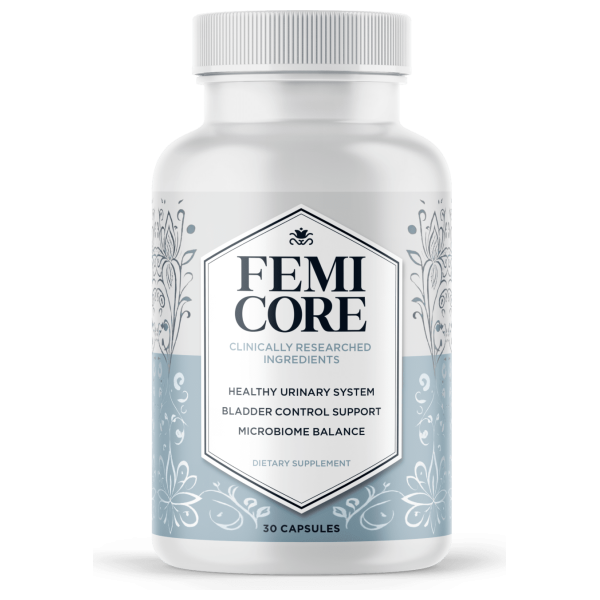
FemiCore is a one-a-day capsule sold to women over 45 for bladder leaks and urinary health. This review covers its full label, including bearberry, an herb meant for short-term use, what research shows for bladder leaks and urinary tract infections, the sales claims about dioxins and the “urinary microbiome”, the prices and the 60-day refund.
Scientific Analysis of Bearberry
Treating urinary tract infections
In a double-blind trial in 42 German family practices, published in 2021, 398 women with an uncomplicated UTI took either an uva ursi extract or the antibiotic fosfomycin. The uva ursi group used 64% fewer antibiotic courses, but had a heavier burden of symptoms, and eight women developed a kidney infection, against two with fosfomycin, a difference that did not reach statistical significance. The authors concluded that starting with uva ursi reduced antibiotic use but led to more symptoms and more safety concerns.
Preventing UTIs and bladder leaks
We found no trials of uva ursi for preventing urinary tract infections or for bladder leaks. For preventing repeat UTIs, cranberry has much better evidence.
Why use is limited to a week
The European Medicines Agency accepts bearberry leaf only on the basis of long-standing traditional use, for mild, recurring symptoms of lower urinary tract infection, and notes that no clinical studies are available with preparations containing only bearberry leaf. Its guidance is that bearberry leaf medicines should be used only by adult women, only after a doctor has ruled out serious conditions, and for no longer than one week; women with kidney disorders must not take them, and a doctor should be seen if symptoms last more than four days or get worse.
Side effects and who should avoid it
Nausea, vomiting and stomach ache have been reported. Do not take uva ursi if you have kidney problems, and its safety in pregnancy and breastfeeding has not been established, so avoid it then. Because use is limited to a week, daily long-term use, as some supplements suggest, goes against European guidance.
How it is taken
Bearberry leaf is usually taken as a herbal tea or in tablets or capsules, for a few days at most, and never for more than a week.
Products we review that contain it
FemiCore lists bearberry leaf (uva ursi) in a 350 mg blend without stating the amount, and its seller suggests taking it every day for three to six months, far longer than the one-week limit in European guidance.
Frequently Asked Questions
Uva ursi is bearberry (Arctostaphylos uva-ursi), an evergreen shrub whose leaves are a traditional remedy for mild bladder infections. The leaves contain arbutin, which the body converts to hydroquinone.
Yes. Uva ursi, bearberry and kinnikinnick are names for the same plant, Arctostaphylos uva-ursi; supplements use its leaves.
The evidence is weak. In a 2021 trial in 398 women with a UTI, an uva ursi extract cut antibiotic use but caused heavier symptoms than the antibiotic fosfomycin, with eight kidney infections against two. European regulators accept it only on the basis of traditional use.
No longer than one week, according to the European Medicines Agency. See a doctor if symptoms last more than four days or get worse.
Nausea, vomiting and stomach ache have been reported. It is meant only for adult women, not for anyone with kidney problems, and its safety in pregnancy and breastfeeding has not been established.
It has not been tested for either, and it is not meant for long-term daily use. For preventing repeat UTIs, cranberry has better evidence; for leaks, pelvic floor muscle training does.
Among the products we review, FemiCore lists bearberry leaf in a 350 mg blend without the amount, and its seller suggests taking it daily for three to six months.
⚖️ Conclusion
Uva ursi is a traditional remedy for mild bladder infections that European regulators accept only for a few days’ use by adult women. The one sizeable trial found that it caused heavier symptoms than an antibiotic, with more kidney infections, and it has never been tested for preventing infections or for bladder leaks. Because its leaves contain arbutin, which the body turns into hydroquinone, use is capped at one week and ruled out for anyone with kidney problems. A supplement that asks you to take it every day for months is going against that guidance; for repeat UTIs, cranberry and a doctor’s advice are the better route.