
Nagano Tonic Review: What Is in the Lean Body Tonic, and Does It Burn Calories?
Last updated: · How we review
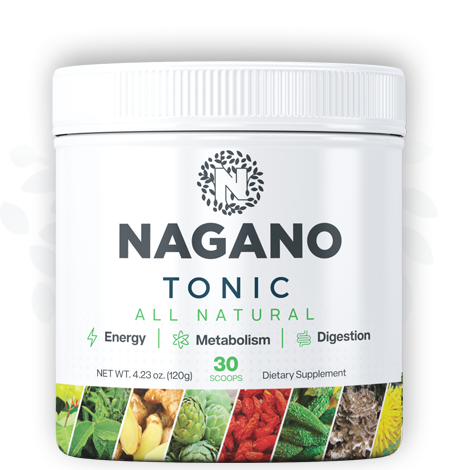
Nagano Tonic, sold as Nagano Lean Body Tonic, is a flavoured powder you stir into water or another drink once a day. Each scoop combines a greens and berry blend, nine herbs including green tea extract, ashwagandha, ginger, cinnamon and Panax ginseng, a small fibre and enzyme blend, five probiotic strains, and vitamins C and B12. It is marketed as a “Japanese elixir” that wakes up a sleeping metabolism. This review covers what the label discloses, what research on its ingredients shows at these amounts, the real package prices and how the 180-day refund works.
Secure 180-Day Money Back Guarantee
Nagano Tonic at a Glance
Nagano Tonic is a once-a-day drink powder sold for weight loss, combining a greens blend, nine herbs including nearly caffeine-free green tea extract, ashwagandha, ginger and cinnamon, plus inulin, probiotics and vitamins C and B12. Several of these ingredients had small effects on weight in trials, but at doses far larger than one scoop holds, and the product itself has not been tested.
- Price: $39 to $79 per bottle, depending on the package
- Refund window: 180-day money-back guarantee
- Our score: 3.6/5 (Decent) · how we scored it
What Nagano Tonic is
Nagano Tonic is a dietary supplement powder sold as Nagano Lean Body Tonic. The directions are one scoop a day, stirred into a glass of water or your favourite drink, usually in the morning. A bottle holds 30 scoops, so it lasts a month, and each scoop has about 10 calories.
The sales page calls it a “mystical Japanese elixir” that kickstarts a “deep, sleeping part of your metabolism”, and promises fat loss, more energy, fewer cravings and a higher sex drive. Despite the name, the vendor says it is made in the USA, in an FDA-registered facility that follows GMP guidelines. It is sold only through leanbodytonic.com, with ClickBank processing the order.
What is in it
Unlike most products in this category, the vendor publishes the full Supplement Facts label. Two vitamins get exact amounts; everything else is grouped into four blends, with a total weight for each blend but not for the ingredients inside it.
- Vitamin C, 75 mg (83% of the daily value), from acerola extract and ascorbic acid.
- Vitamin B12, 25 mcg (1,042% of the daily value).
- Super Food Greens and Antioxidant Blend, 2 g: alfalfa leaf, barley grass, spinach, spirulina, asparagus, blueberry, broccoli, camu camu, cranberry, pomegranate, raspberry and strawberry juice powder.
- Nutrient Dense Natural Herbs and Extracts, 800 mg: acerola, cassia cinnamon, eleuthero root, ginger root, mangosteen extract, ashwagandha root, bitter melon, green tea extract (standardised to 50% EGCG and under 1% caffeine) and Panax ginseng root.
- Digestive Complex, 406 mg: apple fibre, inulin from chicory root, and the enzymes bromelain and papain.
- Probiotic Blend, 22.5 mg: 2.5 billion CFU at the time of manufacture, from five named Lactobacillus and Bifidobacterium strains, including L. rhamnosus LRa05.
The other ingredients are natural flavours, citric acid, stevia leaf extract and silicon dioxide. The sales page leads with camu camu, EGCG and mangosteen, but on the label camu camu is one of twelve foods sharing a 2 g blend.
What the research actually supports
The sales page lists 35 references, and several are real trials. The catch is that they tested far larger amounts than one scoop of Nagano Tonic can contain. Nine herbs share 800 mg, an average of under 90 mg each.
- Ashwagandha: the trial the vendor cites gave 52 adults under chronic stress 300 mg of root extract twice a day for 8 weeks; stress scores, food cravings and body weight improved compared with placebo. That is 600 mg a day, three-quarters of this product’s entire herb blend.
- Green tea extract: the cited trial gave 102 women with central obesity 856.8 mg of EGCG a day for 12 weeks, and their average weight fell from 76.8 kg to 75.7 kg. Even if the whole 800 mg blend were green tea extract at 50% EGCG, a scoop would hold under 400 mg. A Cochrane review judged green tea’s effect on weight too small to matter clinically.
- Cinnamon: a 2020 meta-analysis of 12 trials found about 1 kg of extra weight loss on average, with fat-mass reductions at 2 g a day or more for at least 12 weeks.
- Ginger: a 2019 meta-analysis of 14 small trials found a modest drop in body weight but no significant change in BMI.
- Inulin: the trial the vendor cites gave people with prediabetes 30 g a day for 18 weeks, and they kept off more weight than a control group (a further 2.3% loss against 0.6%). Nagano Tonic’s inulin shares a 406 mg blend with apple fibre and two enzymes, so it is well under half a gram.
- Mangosteen: the cited pilot study added mangosteen extract to behavioural therapy in 22 women with obesity for 26 weeks; its main finding was better insulin sensitivity, not weight loss.
- Panax ginseng, eleuthero and camu camu: the evidence offered is thin: an 8-week study of ginseng in 10 women with no placebo group, a study of 800 mg a day of eleuthero in 9 trained men that measured endurance rather than weight, and a camu camu study in mice.
- Probiotics: the label names its strains, but the vendor cites no study of them, and evidence that probiotics help with weight loss is limited. The 2.5 billion CFU count applies at manufacture, and heat kills live bacteria, so a hot drink is not the best way to take it.
Two more claims do not hold up. Vitamin B12 only boosts energy if you are deficient. And the idea of a “sleeping” metabolism is not supported: a 2021 study of more than 6,000 people found that metabolic rate, adjusted for body size, stays stable from about age 20 to 60 and only declines after that.
Does Nagano Tonic burn calories?
No study has measured it. Its green tea extract is standardised to under 1% caffeine, so a scoop contains almost no caffeine, and trials that found green tea raising calorie burning mostly used extracts combined with caffeine. Ginger and green tea catechins do have small thermogenic effects in research, but at far higher doses than this. So unlike many metabolism products, Nagano Tonic is not a stimulant, and there is little reason to expect a noticeable rise in the calories you burn.
Side effects and who should skip it
At these amounts most people are unlikely to have problems, and the low caffeine content is a plus. Several ingredients do carry known cautions:
- Blood sugar: bitter melon, cinnamon and Panax ginseng can lower blood sugar, so check with your doctor if you take diabetes medication.
- Ashwagandha: rare cases of liver injury have been reported with ashwagandha supplements, it may affect thyroid hormone levels, and it is not recommended in pregnancy.
- Panax ginseng: can cause sleeplessness and may affect blood clotting, so ask your doctor if you take warfarin or another blood thinner.
- Fibre and probiotics: inulin and probiotics can cause gas or bloating at first, although the amounts here are small.
If you are pregnant or breastfeeding, take regular medication, or have a liver or thyroid condition, talk to your doctor before using it.
Price and which package makes sense
One bottle costs $79, plus $9.95 shipping in the US. Three bottles cost $177 ($59 each) and six cost $234 ($39 each), with free US shipping on six. The order section shows “+Shipping” under the three-bottle package, while the vendor’s shipping policy lists it as free, so check the total at checkout. Crossed-out prices of $127, $381 and $762 are reference prices, not anything you would pay. It is a one-time payment with no subscription. The page also offers three digital bonus guides, though it contradicts itself on whether a one-bottle order includes them.
The vendor says its ingredients have their greatest effect after 90 days or more. Three bottles cover that, and the 180-day refund window, counted from the date your order ships, leaves time to decide. Six bottles is the cheapest per bottle, but it is $234 for a product you have not tried. Our Nagano Tonic buying guide covers where it is sold and how shipping works.
How the 180-day refund works
You have 180 days from the date your order ships. Email the vendor’s support address with “Refund Request” in the subject and wait for an agent to confirm, then send back all your bottles, empty and unopened, to the vendor’s returns address in Tallmadge, Ohio, with a note giving your name, order number and email address. You pay the return postage, and the vendor asks you to email the tracking number. Refunds are issued once the return is registered and usually take 5–10 days to appear on your statement. Keep your empty bottles until you are sure, because the policy asks for them.
The sales page
The page is calmer than many in this category: there is no countdown timer or stock counter, the prices are listed clearly, and the full label is shown. It loses marks elsewhere. It says Nagano Tonic “is proven to support healthy weight loss”, but no trial of the product exists. Its testimonials carry “Verified Purchase” labels that cannot be checked. And the reference list includes a study of turmeric, which the tonic does not contain, and a laboratory review of mangosteen compounds as possible cancer drugs, which says nothing about weight. “FDA-registered facility” means the factory is registered with the FDA, not that the FDA has approved the product.
Realistic expectations
At the doses used in research, ingredients like green tea, cinnamon and inulin produce differences of a kilo or two over several months, and one scoop of Nagano Tonic holds a fraction of those doses. Diet, activity and sleep will matter far more. If you want a daily greens drink with a little fibre, vitamin C and probiotics, it is a low-caffeine way to get one, but treat any weight change as a bonus rather than the point, and use the long refund window to judge honestly.
🧪 Key Ingredients
What is in the formula, with a short note on each ingredient:
🌿 Cinnamon Bark
Cinnamon Bark is a botanical extract derived from the inner bark of Cinnamomum trees, traditionally used to support glucose metabolism. Its compounds have been studied for effects on blood sugar and as antioxidants, with mixed results in human trials.
🌿 EGCG
EGCG, or Epigallocatechin Gallate, is a potent plant-based compound known as a catechin, primarily found in green tea. It is studied for its antioxidant properties and its effects on weight and cholesterol, with modest results, and high-dose supplements can harm the liver.
🌿 Ginger Root
Ginger root is the underground stem (rhizome) of the ginger plant, used as a spice and studied mainly for nausea and pain relief. Derived from the Zingiber officinale plant, it is widely used in supplements to combat nausea and support joint health.
🌿 Green Tea Extract
Green tea extract is a highly concentrated form of the Camellia sinensis plant, rich in bioactive polyphenols and EGCG. It is a popular supplement studied mainly for weight, cholesterol and blood sugar, with modest results so far.
🌿 Inulin
Inulin is a naturally occurring soluble fiber categorized as a fructan, found in various plants like chicory root. It acts as a prebiotic, feeding beneficial gut bacteria, and is best studied for improving bowel regularity.
🌿 Lactobacillus Rhamnosus
Lactobacillus rhamnosus is a probiotic bacterial species, best known for the GG strain, whose effects in clinical trials depend on the strain and the condition studied. It is one of the most widely researched bacteria for supporting digestive health, immune function, and vaginal balance.
🌿 Panax Ginseng
Panax Ginseng, also known as Korean or Asian Ginseng, is a root that has been used in traditional medicine for centuries to restore vitality and balance. Modern research has studied it for possible effects on thinking, fatigue, and physical performance, with mixed results so far.
🌿 Spirulina
Spirulina is a microscopic blue-green algae that thrives in alkaline water environments. It is rich in protein and contains vitamins, minerals and antioxidant pigments, and it is widely sold as a dietary supplement.
🌿 Vitamin B12
Vitamin B12, also known as cobalamin, is a vital water-soluble nutrient essential for red blood cell formation, neurological function, and DNA synthesis. It is essential for cellular metabolism, and the body cannot produce it on its own.
🌿 Ashwagandha Root
An adaptogen. In a trial of 52 adults under chronic stress, 300 mg of root extract twice a day for 8 weeks lowered stress scores, food cravings and body weight compared with placebo. Not advised in pregnancy; rare liver injury has been reported.
🌿 Mangosteen Extract
A 26-week pilot study in 22 women with obesity found better insulin sensitivity when mangosteen extract was added to behavioural therapy.
🌿 Bitter Melon
Studied for blood sugar with mixed results. It can lower blood sugar, so take care if you use diabetes medication.
🌿 Eleuthero Root
In a study of 9 trained men, 800 mg a day for 8 weeks improved endurance; it was not a weight-loss study.
🌿 Camu Camu and Acerola
Vitamin C-rich fruits. The camu camu weight study the vendor cites was in mice.
🌿 Probiotic Blend (2.5 billion CFU)
Five named Lactobacillus and Bifidobacterium strains, counted at manufacture. The vendor cites no study of these strains, and evidence that probiotics help with weight loss is limited.
*Always consult with your physician before starting any new supplement.
✅ Pros
- The full Supplement Facts label is published, with blend weights, a probiotic CFU count and named strains - more than most weight-loss products show.
- Nearly caffeine-free: the green tea extract is standardised to under 1% caffeine, so it is not a stimulant.
- A 180-day money-back guarantee, counted from shipping, among the longest of the weight-loss products we review.
- One scoop a day in any drink, with a one-time payment and no subscription.
- A calm sales page by category standards: no countdown timer or stock counter, and prices clearly listed.
❌ Cons
- Nine herbs share an 800 mg blend, so each is far below the amounts used in the studies the vendor cites - for example 600 mg a day of ashwagandha.
- The inulin sits in a 406 mg blend; the inulin trial the vendor cites used 30 g a day.
- The product itself has never been tested, and the idea of a sleeping metabolism is not supported by research.
- The sales page calls it proven and cites studies of ingredients it does not contain, such as turmeric.
- Refunds require returning every bottle, empty or not, at your own postage cost.
- Bitter melon, cinnamon and ginseng can lower blood sugar, and ashwagandha is not recommended in pregnancy.
What Specific Issues Can Nagano Tonic Help With?
Based on the formula and our research, this product is frequently considered for the following health concerns:
Choose Your Package
180-Day Money-Back Guarantee
Nagano Tonic is covered by a 180-day money-back guarantee, counted from the date your order ships. To claim it, email the vendor’s support address with “Refund Request” in the subject and wait for an agent to confirm, then send back all your bottles, empty and unopened, to the vendor’s returns address in Tallmadge, Ohio. You pay the return postage. The vendor says refunds usually take 5–10 days to appear on your statement once the return is registered.
Frequently Asked Questions
Nagano Tonic, sold as Nagano Lean Body Tonic, is a drink powder marketed for weight loss and energy. One scoop a day combines a greens and berry blend, nine herbs including nearly caffeine-free green tea extract, ashwagandha, ginger and cinnamon, a small fibre and enzyme blend, five probiotic strains, and vitamins C and B12. It is sold only at leanbodytonic.com, with ClickBank processing orders, and comes with a 180-day refund.
No study has measured that. Its green tea extract is standardised to under 1% caffeine, and trials that found green tea raising calorie burning mostly used extracts with caffeine, at much higher doses. Ginger and green tea catechins have small thermogenic effects in research, but one scoop holds a fraction of the amounts studied, so any effect on calories burned is likely to be very small.
It has not been tested. Several of its ingredients - ashwagandha, green tea, cinnamon, ginger and inulin - produced small weight differences in trials, typically a kilo or two over several months, but at doses far larger than this product contains. The inulin study the vendor cites, for example, used 30 g a day; Nagano Tonic’s inulin shares a 406 mg blend.
It is a real product sold through ClickBank, a large online retailer, with a published label and a 180-day refund, so you can try it on a money-back basis. It is not proven, though: the sales page says it is proven to support weight loss, but no trial of the product has been published.
The vendor says to stir one scoop into a glass of water or another drink each morning. A bottle holds 30 scoops, a month’s supply. Because it contains live probiotics, a cold or room-temperature drink is a better choice than a hot one.
Very little. The label says its green tea extract contains under 1% caffeine, and it is one of nine herbs in an 800 mg blend, so a scoop holds under 8 mg of caffeine even if the whole blend were green tea extract. A typical cup of coffee has about 95 mg.
No. The name and the Japanese elixir story are marketing; the vendor says it is made in the USA in an FDA-registered facility that follows GMP guidelines. Some of its ingredients, such as Panax ginseng and green tea, have a long history of use in East Asia.
Check with your doctor first if you take regular medication. Bitter melon, cinnamon and Panax ginseng can lower blood sugar, which matters with diabetes medication; ginseng may affect blood clotting; and ashwagandha may affect thyroid hormone levels. It is not recommended during pregnancy or breastfeeding.
You have 180 days from the date your order ships. Email the vendor with Refund Request in the subject, wait for confirmation, then return all your bottles, empty and unopened, to the vendor’s address in Tallmadge, Ohio, at your own postage cost. Refunds usually reach your statement within 5-10 days of the return being registered.
🎉 Special Offer Available
For a limited time, get the 6 Bottles for just $234 ($39/bottle).
180 Day Supply
💰 Save $240
See Why Everyone's Choosing This →How we scored Nagano Tonic
Five weighted criteria — see our full methodology.
Whether the label discloses how much of each ingredient it contains, rather than hiding amounts inside a proprietary blend.
Whether the finished product has been tested in a published trial, or the claims rest on research into individual ingredients.
Monthly cost on the three-month package, the shortest course most vendors recommend (the single price for one-off digital products), compared against the rest of the category.
Length of the refund window measured against the trial period the vendor itself recommends.
How the product is sold: sales channel, checkout upsells, subscription defaults and how clearly the offer is presented.
The full label is published, with blend weights, a probiotic count and named strains, which is more than most weight-loss products show; but nine herbs share one 800 mg blend, so no herb gets an amount. Its best-researched ingredients - ashwagandha, green tea, cinnamon, ginger and inulin - were studied at doses one scoop cannot hold: the inulin shares a 406 mg blend, against 30 g a day in the trial the vendor cites. A calmer sales page than most, with no countdown or stock counter, but marked down for calling the product proven with no trial of it, and for a reference list that includes ingredients it does not contain. The 180-day refund is among the longest, though every bottle must be returned at your own cost.
Final Verdict
Nagano Tonic is more open than most weight-loss products we review: the full label is published, with blend weights, a probiotic count and named strains, and its green tea extract is nearly caffeine-free, so it is not a stimulant. The problem is the amounts. Nine herbs share 800 mg and the inulin sits inside a 406 mg blend, while the trials behind these ingredients used far more - 600 mg a day of ashwagandha, and 30 g a day of inulin in the study the vendor cites. Nothing in the formula suggests it can wake a sleeping metabolism, and the product itself has never been tested.
If you want to try it, the 180-day guarantee makes it low-risk, as long as you keep every bottle, empty or not, because the refund means sending them all back at your own cost. Skip it if you are pregnant or breastfeeding, and check with your doctor first if you take diabetes, thyroid or blood-thinning medication, or any other regular prescription.
Why Trust This Review?
We check claims against published research and score every product with the same published rubric. We earn a commission if you buy through our links (disclosure); it never changes a score.
- ✓ Scored with our published rubric
- ✓ Claims checked against published research
- ✓ Refund terms checked
- ✓ Affiliate commissions disclosed
Thinking of Trying Nagano Tonic?
Order only from the official site, so the 180-day money-back guarantee applies, and check the total price and refund terms before you pay.
✓ Secure Checkout ✓ 180-Day Money-Back Guarantee