
Finessa Review: What Is in This Gut Powder, and Does It Work?
Last updated: · How we review
Finessa is a powdered digestive supplement sold for constipation, bloating and a “flatter belly”. One scoop combines fruit and vegetable powders, liver herbs such as dandelion and milk thistle, probiotics and cascara sagrada, a stimulant laxative. This review covers what the label shows, what the research supports, why the laxative matters, side effects, the real prices and how the 180-day refund works.
Secure 180-Day Money Back Guarantee
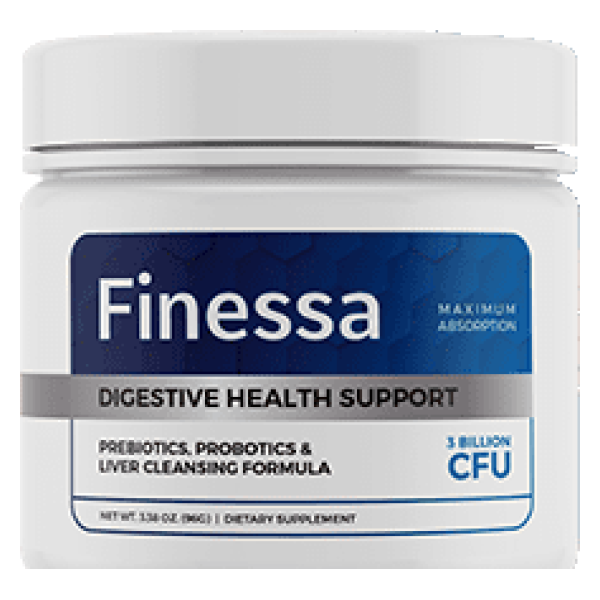
Finessa at a Glance
Finessa is a powdered digestive supplement: one scoop mixes fruit and vegetable powders, herbs including dandelion, milk thistle, artichoke and turmeric, probiotics, prebiotic fiber and cascara sagrada, a stimulant laxative. The cascara may well make you go, but its dose is not disclosed, and stimulant laxatives are not meant for the six months of daily use the seller recommends. Nothing supports its flatter-belly, cholesterol or blood sugar claims.
- Price: $39 to $59 per bottle, depending on the package
- Refund window: 180-day money-back guarantee
- Our score: 3.0/5 (Mixed) · how we scored it
What Finessa is
Finessa is a powdered drink mix sold for digestion at myfinessa.com, with ClickBank processing the order. You stir one scoop into water each morning. The sales page promises relief from “occasional constipation, bloating, diarrhea, and sluggish digestion”, “a lighter, flatter, more comfortable belly”, and support for cholesterol, blood sugar, energy and metabolism. Its big idea is the “gut-liver axis”: herbs for the liver to boost bile flow, plus probiotics and plant compounds for the gut. The site’s terms name the seller only as “Finessa”; ClickBank’s listing says it was created by the “Diamond Elite Team”, and returns go to a fulfillment center in Tallmadge, Ohio.
What is in it
The Supplement Facts label on the sales page lists, per scoop (10 calories and 3 g of carbohydrate):
- Polyphenol Blend, 1,000 mg: beetroot, black currant, pomegranate, raspberry, strawberry juice, cranberry, blueberry and purple carrot powders, and acai berry extract.
- Gut Health blend, 755 mg: cassia cinnamon, ginger, cascara sagrada bark extract (10:1), deglycyrrhizinated licorice (DGL) and fructooligosaccharides (FOS), a prebiotic fiber.
- Liver Health Blend, 450 mg: dandelion root, turmeric, milk thistle, artichoke extract (standardized to 5% cynarin) and silymarin from milk thistle seed.
- Probiotic Blend, 52.5 mg: 5 billion CFU at the time of manufacture. It lists L. casei, L. acidophilus, L. rhamnosus, Clostridium butyricum and Streptococcus thermophilus, plus four named strains: Bacillus coagulans BC99, L. acidophilus LA85, Bifidobacterium lactis BL80 and L. reuteri LR08.
- Akkermansia muciniphila AH39: 2 mg.
- Also: selenium 1 mcg, sodium 40 mg and potassium 10 mg. Other ingredients are resistant dextrin (a fiber), natural flavors, citric acid, sea salt, stevia and silicon dioxide.
No amount is given for any single ingredient, including the cascara, the one that matters most for side effects. The label also says each tub holds 50 servings, while the sales page sells each tub as a 30-day supply, so check the label on yours.
The ingredient doing the work: cascara sagrada
Cascara sagrada is the bark of a North American tree and a stimulant laxative: its anthraquinone compounds make the bowel wall contract. That is the likeliest reason people notice Finessa working, and for short-term constipation, stimulant laxatives do work. The problems are how Finessa presents it and how long it tells you to take it.
- In 2002 the FDA ruled that cascara sagrada and aloe could no longer be used in over-the-counter laxative medicines, because manufacturers had not supplied the safety data it asked for. Cascara is still allowed in dietary supplements, which are not approved before they are sold.
- LiverTox, the US National Institutes of Health’s database on drug and supplement liver injury, describes rare cases linked to cascara, mostly with high doses or use for longer than recommended. One published case developed cholestatic hepatitis with portal hypertension.
- Over-the-counter laxatives in the US carry a warning not to use them for longer than a week unless a doctor says so. Finessa’s page recommends taking it every day for “6 months minimum”.
- The sales page says Finessa has “no known side effects”, and the support page says it is “not a stimulant”. Cascara is a stimulant laxative, and cramping and diarrhea are its known side effects.
Finessa and diarrhea
The sales page says people are “breaking free” from diarrhea as well as constipation. A product containing a laxative is the wrong choice for diarrhea: cascara speeds the bowel up, and loose stools are one of its most common side effects, while the prebiotic fibers in Finessa (FOS and resistant dextrin) can add gas and bloating. If Finessa gives you diarrhea, stop taking it. Diarrhea that lasts more than two days, or comes with blood, a high fever or signs of dehydration, needs a doctor.
What the research actually supports
- Probiotics: the sales page quotes a real meta-analysis accurately. Across 14 trials in 1,182 adults with constipation, probiotics added about 1.3 bowel movements a week and shortened gut transit time by about 12 hours. The effect was clear for Bifidobacterium lactis but not for another well-studied strain, and the authors warned that the trials varied widely and were at high risk of bias. Benefits depend on the strain and dose, and Finessa does not say how much of each strain it contains.
- Artichoke leaf extract: in a six-week trial in 247 people with functional dyspepsia (indigestion), 320 mg taken twice, three times a day (1,920 mg in total) eased symptoms more than a placebo. Finessa’s whole liver blend is 450 mg, shared by five ingredients. The artichoke study the sales page cites is a different thing: healthy adults took 10 g a day of inulin, a fiber extracted from artichoke, and reported more bloating.
- Dandelion: the sales page credits “a 2022 study” with showing that dandelion speeds food out of the stomach. The study in its reference list is from 2011 and was done in mice and rats. Human evidence for dandelion is very limited.
- Turmeric: the 2023 study the page cites, which found more and wetter stools, was also in rats.
- Milk thistle: studied mainly for liver disease, where the evidence is weak. Nothing shows it relieves constipation or bloating.
- Fiber: a scoop has only 3 g of carbohydrate in total, so it can supply at most a few grams of FOS and resistant dextrin. The European Food Safety Authority’s accepted effect on stool frequency for inulin, a similar fiber, needs at least 12 g a day.
- Licorice: the label specifies DGL, licorice with the glycyrrhizin removed, which avoids the blood pressure problems of ordinary licorice.
No trial has tested Finessa itself, and we found no research supporting its claims about cholesterol, blood sugar, metabolism, skin or focus.
Side effects and who should skip it
- Common: cramping, loose stools or diarrhea from the cascara, and gas or bloating from the added fibers, especially in the first weeks.
- Long-term daily use: stimulant laxatives can cause low potassium and dehydration when overused, and cascara has been linked to rare liver injury. Do not take Finessa every day for months without your doctor’s agreement.
- Medicines: ask a doctor or pharmacist first if you take diuretics, steroids or heart medicines such as digoxin, because laxative overuse can lower potassium.
- Skip it if you are pregnant or breastfeeding, have inflammatory bowel disease such as Crohn’s disease or ulcerative colitis, have a bowel obstruction or belly pain you cannot explain, or have liver disease. The seller says it is for adults over 18.
- See a doctor for constipation that does not get better with self-care, and right away if it comes with blood in your stool, bleeding from the rectum, constant belly pain, vomiting, fever or weight loss you cannot explain.
Price and which package makes sense
One tub costs $59 plus $9.95 shipping in the US. Three cost $147 ($49 each) and six cost $234 ($39 each), with free US shipping on six; the sales page shows shipping on the three-pack, but the shipping policy says it is free, so check the total at checkout. The $99 “regular” price is not something anyone pays. It is a one-time payment with no subscription, but the seller’s affiliate page describes an upsell funnel after checkout.
The seller recommends three to six months. Because Finessa contains a stimulant laxative, a six-month supply is not a sensible starting point: if you want to try it, one tub tells you how it affects you, and the 180-day guarantee covers it. Our Finessa buying guide covers where it is sold and shipping.
How the 180-day refund works
You have 180 days from the day your order ships. First email support with “Refund Request” in the subject line and wait for an agent to confirm, or your return may not be matched to your order. Then send back all your tubs, both empty and unopened, to the returns address in Tallmadge, Ohio, at your own postage cost, with a note giving your name, order number and email address, and email the tracking number to support. The refund is issued once the return is received and usually takes 5 to 10 days to appear on your statement. The sales page says “no questions asked”, but you do need to follow those steps.
The sales page
The prices are clearly listed, and the label is shown. But the page says Finessa has “no known side effects” and that its nutrients “can only be beneficial”, tells readers that every adult “no matter your age” can take it, and calls it “the only formula to target the critical gut-liver axis”, a claim with nothing behind it. It also hints that prices may not “stay this low for long”. Parts of the website seem to come from another product: the references page lists studies on brown fat, cold water and resveratrol, none of them about Finessa’s ingredients, and the support page sells it for weight loss and blood sugar. The seller’s affiliate page suggests ads built around “GLP-1” and stories of people flushing out pounds of “backed up” stool; nothing in the formula acts like a GLP-1 medicine.
Realistic expectations
Finessa may well make you go, because it contains a laxative, but that is a short-term remedy rather than a fix for what causes constipation. The fiber, herbs and probiotics in it come in amounts too small, or too poorly disclosed, to expect much on their own. More fiber from food or a supplement such as psyllium, enough fluids and regular activity have better evidence, and if you need a laxative, products with a clear dose and short-term directions are simpler and cheaper. Our inulin page covers how much prebiotic fiber it takes to make a difference.
🧪 Key Ingredients
What is in the formula, with a short note on each ingredient:
🌿 Artichoke Leaf Extract
Artichoke Leaf Extract is an herbal supplement derived from the leaves of the globe artichoke, which contain antioxidants such as cynarin. It is mainly used for indigestion and has also been studied for cholesterol and liver health.
🌿 Beetroot Powder
Beetroot powder is a dried, ground form of the beet (Beta vulgaris), used mainly as a source of dietary nitrate, although nitrate levels vary widely between products. It is used to raise nitric oxide levels, with modest evidence, mostly from beetroot juice, for lower blood pressure and better endurance.
🌿 Cinnamon Bark
Cinnamon Bark is a botanical extract derived from the inner bark of Cinnamomum trees, traditionally used to support glucose metabolism. Its compounds have been studied for effects on blood sugar and as antioxidants, with mixed results in human trials.
🌿 Ginger Root
Ginger root is the underground stem (rhizome) of the ginger plant, used as a spice and studied mainly for nausea and pain relief. Derived from the Zingiber officinale plant, it is widely used in supplements to combat nausea and support joint health.
🌿 Lactobacillus Reuteri
Lactobacillus reuteri (now officially named Limosilactobacillus reuteri) is a probiotic bacterium that produces an antimicrobial substance called reuterin. Its effects depend on the strain: the best evidence is for DSM 17938 in colicky breastfed babies, with smaller studies in gum disease and H. pylori treatment.
🌿 Lactobacillus Rhamnosus
Lactobacillus rhamnosus is a probiotic bacterial species, best known for the GG strain, whose effects in clinical trials depend on the strain and the condition studied. It is one of the most widely researched bacteria for supporting digestive health, immune function, and vaginal balance.
🌿 Licorice Root
Licorice root, derived from the Glycyrrhiza glabra plant, has been used for centuries in traditional medicine for a range of complaints. It is often promoted for digestive, throat and skin uses, but NCCIH says there isn't enough high-quality evidence to clearly support it for any health condition.
🌿 Milk Thistle (Silymarin)
Milk thistle is an herbal supplement made from the seeds of the Silybum marianum plant, valued for its active mix of compounds called silymarin. It is widely used for liver health, but human trials have not clearly shown that it treats liver disease.
🌿 Taraxacum
Taraxacum, most commonly known as the dandelion, is a plant used for centuries in traditional medicine for liver, kidney and digestive complaints. It contains compounds with antioxidant activity in lab tests and is sold in supplements, but human evidence for its benefits is very limited.
🌿 Cascara Sagrada Bark Extract
A stimulant laxative that makes the bowel contract. The FDA ruled it out of over-the-counter laxative medicines in 2002 for lack of safety data, and it has been linked to rare liver injury with high doses or long use. Dose not disclosed.
🌿 Probiotic Blend (5 billion CFU)
In a meta-analysis of 14 trials, probiotics added about 1.3 bowel movements a week in adults with constipation, most clearly Bifidobacterium lactis. Effects depend on strain and dose; amounts per strain are not given.
🌿 Dandelion Root
The digestion study the seller cites was in mice and rats; human evidence for dandelion is very limited.
🌿 Turmeric
The stool study the seller cites was in rats with a model of constipation-type IBS; no human trial supports it for constipation.
🌿 FOS and Resistant Dextrin
Prebiotic fibers, at most a few grams per scoop since the label lists 3 g of carbohydrate in total. They can cause gas and bloating.
🌿 Polyphenol Blend (1,000 mg)
Fruit and vegetable powders such as beetroot, pomegranate, cranberry and blueberry, about a gram in total. No trial supports a digestive effect at this amount.
*Always consult with your physician before starting any new supplement.
✅ Pros
- A Supplement Facts label is published, with blend totals, named probiotic strains and 5 billion CFU.
- The cascara sagrada in it is a stimulant laxative, so many people with occasional constipation will notice an effect.
- A 180-day money-back guarantee and a one-time payment, with no subscription.
- Reasonably priced for the category, at $59 for one tub or $39 each in a six-pack.
❌ Cons
- Contains cascara sagrada, a stimulant laxative the FDA ruled out of over-the-counter laxative medicines in 2002, at an undisclosed dose.
- The seller recommends six months of daily use and says it has no known side effects; over-the-counter laxatives warn against more than a week without a doctor.
- No amount is given for any single ingredient; its two herbal blends total 1,205 mg, shared by ten ingredients.
- The dandelion and turmeric studies the sales page cites were in mice and rats, and its artichoke study used 10 g a day of artichoke fiber, not the leaf extract in Finessa.
- Sold for diarrhea as well as constipation, although it contains a laxative.
- The label lists 50 servings while the sales page calls each tub a 30-day supply, and the references page lists studies unrelated to the formula.
What Specific Issues Can Finessa Help With?
Based on the formula and our research, this product is frequently considered for the following health concerns:
Choose Your Package
180-Day Money-Back Guarantee
Finessa comes with a 180-day guarantee, counted from the day your order ships. Email support first with “Refund Request” in the subject line and wait for an agent to confirm, then send back all your tubs, empty and unopened, to the returns address in Tallmadge, Ohio, at your own postage cost. The refund is issued once the return is received and usually takes 5 to 10 days to appear on your statement.
Frequently Asked Questions
Finessa is a powdered digestive supplement sold at myfinessa.com through ClickBank. One scoop a day in water provides fruit and vegetable powders, herbs including dandelion, milk thistle, artichoke and turmeric, a probiotic blend, prebiotic fiber and cascara sagrada, a stimulant laxative. It is sold for constipation, bloating and a flatter belly, with a 180-day refund.
Yes. Finessa contains cascara sagrada, a stimulant laxative, and loose stools, diarrhea and cramping are the usual side effects of stimulant laxatives; its prebiotic fibers can add gas and bloating. The label does not say how much cascara a scoop contains. If it gives you diarrhea, stop taking it, and see a doctor if diarrhea lasts more than two days or comes with blood, a high fever or signs of dehydration.
There is no reason to expect it to. The sales page says people are breaking free from diarrhea, but Finessa contains cascara sagrada, a laxative that makes the bowel move faster. If you have diarrhea, a product with a laxative in it is the wrong choice.
It is sold as a digestive supplement, but its Gut Health blend contains cascara sagrada bark extract, a stimulant laxative. Cascara was used in over-the-counter laxative medicines until 2002, when the FDA ruled it out because manufacturers had not supplied safety data. The seller’s support page says Finessa is not a stimulant, which is not accurate for that ingredient.
Per scoop, its label lists a 1,000 mg polyphenol blend of fruit and vegetable powders; a 755 mg Gut Health blend of cassia cinnamon, ginger, cascara sagrada, DGL licorice and FOS; a 450 mg Liver Health blend of dandelion, turmeric, milk thistle, artichoke extract and silymarin; a 52.5 mg probiotic blend with 5 billion CFU; and 2 mg of Akkermansia muciniphila. No amounts are given for single ingredients.
The cascara in it will probably produce bowel movements, as stimulant laxatives do, but that is a short-term remedy. Some probiotics, especially Bifidobacterium lactis, added about 1.3 bowel movements a week in trials, and artichoke leaf extract eased indigestion at 1,920 mg a day, while Finessa’s whole liver blend is 450 mg. Finessa itself has not been tested, and its added fibers can make bloating worse at first.
Not for months without medical advice. Over-the-counter laxatives in the US warn against use for more than a week unless a doctor directs it, yet the seller recommends six months of daily use, and cascara has been linked to rare liver injury, mostly with high doses or long use. Skip it if you are pregnant or breastfeeding, or have inflammatory bowel disease, a bowel obstruction, unexplained belly pain or liver disease, and ask a doctor first if you take diuretics, steroids or digoxin.
It is a real product sold through ClickBank, a large online retailer, with a published label and a 180-day refund. But the seller says it has no known side effects and is not a stimulant, although it contains a stimulant laxative, and parts of its website, such as a references page about brown fat and cold water, have nothing to do with the formula.
The seller says to mix one scoop into water or another drink once a day, in the morning. The label lists 50 scoops per tub, although the sales page calls each tub a 30-day supply.
One tub costs $59 plus $9.95 US shipping, three cost $147 ($49 each) and six cost $234 ($39 each) with free US shipping. The sales page shows shipping on the three-pack while the shipping policy says it is free, so check at checkout. It is a one-time payment, though the seller describes upsells after checkout.
You have 180 days from when your order ships. Email support with “Refund Request” in the subject line and wait for confirmation, then send back all your tubs, empty and unopened, to the returns address in Tallmadge, Ohio, at your own postage cost. The refund is issued once the return arrives and usually takes 5 to 10 days to show on your statement.
🎉 Special Offer Available
For a limited time, get the 6 Bottles for just $234 ($39/bottle).
180 Day Supply
💰 Save $120
See Why Everyone's Choosing This →How we scored Finessa
Five weighted criteria — see our full methodology.
Whether the label discloses how much of each ingredient it contains, rather than hiding amounts inside a proprietary blend.
Whether the finished product has been tested in a published trial, or the claims rest on research into individual ingredients.
Monthly cost on the three-month package, the shortest course most vendors recommend (the single price for one-off digital products), compared against the rest of the category.
Length of the refund window measured against the trial period the vendor itself recommends.
How the product is sold: sales channel, checkout upsells, subscription defaults and how clearly the offer is presented.
A Supplement Facts label is shown, with totals for four blends and named probiotic strains, but no amount for any single ingredient, including the cascara sagrada laxative, and its 50 servings per tub do not match the 30-day supply on the sales page. Evidence is thin: cascara works as a laxative, and some probiotics and artichoke leaf extract have modest digestive evidence at specific, larger doses, but the dandelion and turmeric studies the seller cites were in rodents, and nothing supports the flatter-belly, cholesterol or blood sugar claims. Buying experience scores low because the seller says Finessa has no known side effects, calls it “not a stimulant” and recommends six months of daily use, which no stimulant laxative is meant for. Value and the 180-day refund are its strong points.
Final Verdict
Finessa mixes a long list of fruit powders, herbs and probiotics, but the ingredient most likely to make you feel it working is cascara sagrada, a stimulant laxative. Stimulant laxatives do relieve constipation in the short term. The trouble is that Finessa does not disclose the dose, says it has no known side effects and is not a stimulant, and recommends six months of daily use, far longer than any laxative is meant to be taken without a doctor. The rest of the formula has thin evidence at the amounts its two herbal blends can hold, and nothing supports its flatter-belly, cholesterol or blood sugar claims.
The price and the 180-day refund are reasonable. For occasional constipation, more fiber, fluids and activity, or a laxative with a clear dose and short-term directions, are simpler choices. Constipation that keeps coming back, or comes with blood, weight loss or constant pain, needs a doctor rather than a supplement.
Why Trust This Review?
We check claims against published research and score every product with the same published rubric. We earn a commission if you buy through our links (disclosure); it never changes a score.
- ✓ Scored with our published rubric
- ✓ Claims checked against published research
- ✓ Refund terms checked
- ✓ Affiliate commissions disclosed
Thinking of Trying Finessa?
Order only from the official site, so the 180-day money-back guarantee applies, and check the total price and refund terms before you pay.
✓ Secure Checkout ✓ 180-Day Money-Back Guarantee